Faceless Content Workflow: A Practical System for Short-Form Video
A faceless content workflow can work if you treat it like an operations process, not a growth hack: clear sourcing rules, scripted structure, measured editing steps, and weekly tests against retention and conversion.
The raw TikTok notes this draft started with were directionally useful: grab references, transcribe, rewrite, voice, edit, caption, post. But if you run that loosely, quality drifts fast and legal risk creeps in. This guide turns those notes into a practical system you can run from phone or desktop without pretending there is a magic template.
What a faceless content workflow actually includes
At minimum, you need five repeatable stages: idea intake, script production, voice + footage assembly, edit + captions, and post-publish review. Most creators spend 90% of their time in editing and almost none in review, which is why they can’t explain why one video performs and the next one dies. The workflow below keeps each stage explicit so you can debug performance instead of guessing.
1) Idea intake and source capture
Start with a small queue of proven topics in your niche: questions people repeatedly ask, myths people keep sharing, and “did you know” facts with clear sources. If you use competitor videos as inspiration, log the source URL and your transformation intent (angle change, audience change, format change). This protects you from accidental copy-and-paste production.
2) Script workflow
Use transcription only as a draft input, not final copy. Rewrite with your own hook, your own pacing, and your own closing line. Keep scripts short enough for attention but long enough for substance. A practical format is: 1-sentence hook, 3-5 evidence-backed bullets, 1 contrarian or cautionary note, and 1 next-step CTA. If you want a writing baseline, this older post on improving content quality with AI tools is still a good framework for moving from generic to useful.
3) Voice and footage assembly
You can use AI voice tools and stock b-roll, but consistency matters more than novelty. Lock one voice profile for at least 20 videos before changing it. Build 2-3 background footage buckets (for example: keyboard/desk, city/walk, abstract motion) and reuse them intentionally. Random visual swaps might keep clips fresh, but they also destroy channel identity when overused.
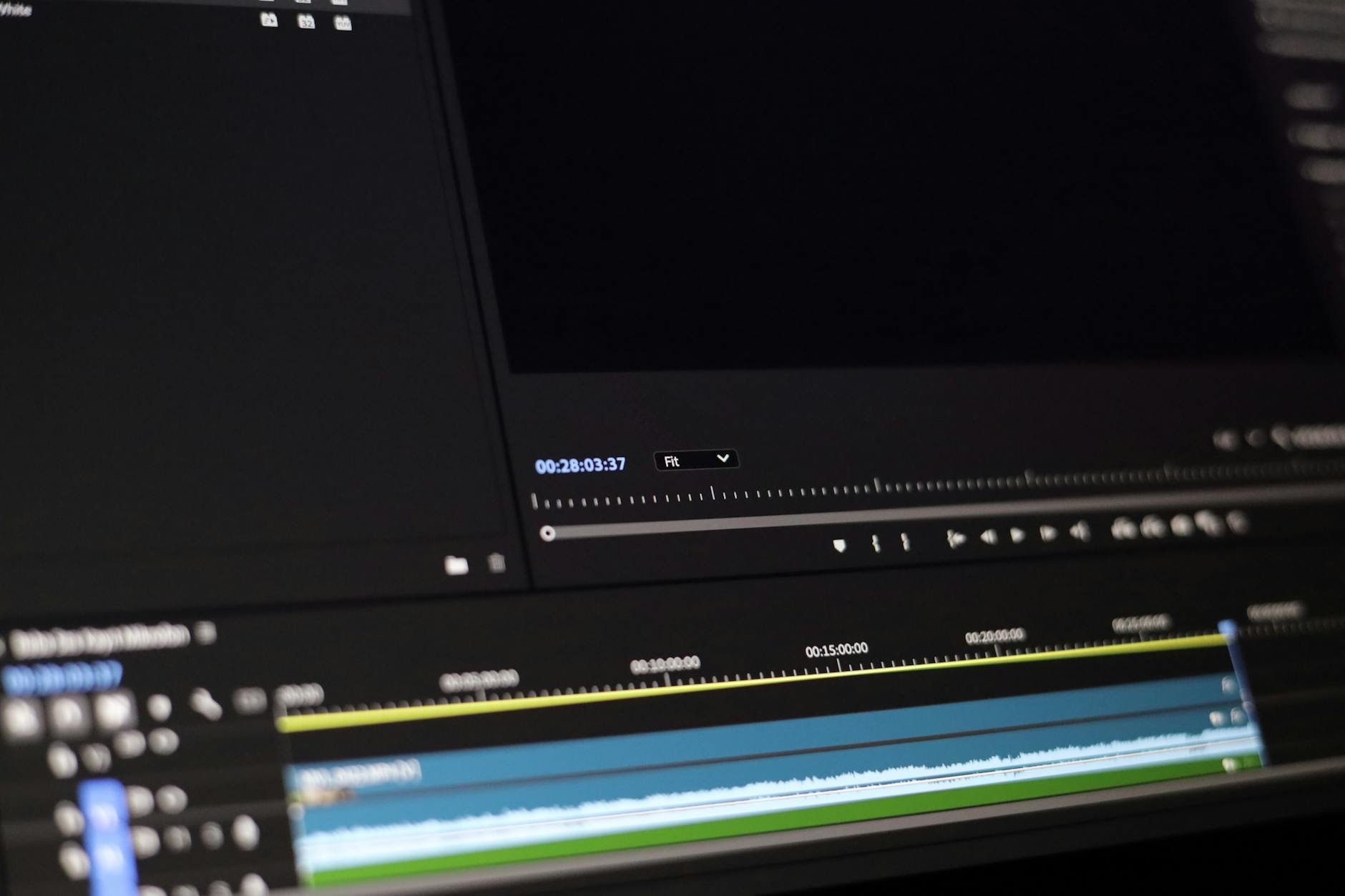
4) Edit and caption rules
- Cut rhythm: keep average shot length stable across videos in the same format.
- Captions: auto-captions are fine, but proof names, numbers, and claims.
- On-screen text: one key point per scene; avoid paragraph overlays.
- Audio: normalize loudness so voice is intelligible on phone speakers.
These details sound small, but they usually explain why “same topic, same niche” videos have wildly different watch-through rates.
Tool stack (phone-first, desktop-optional)
- Reference capture: TikTok, YouTube Shorts, Instagram Reels.
- Transcription: VEED, CapCut, or any reliable speech-to-text tool.
- Script refinement: ChatGPT or similar model, with a fixed prompt template.
- Voice generation: ElevenLabs or equivalent TTS when you need consistency.
- Editing + captions: CapCut (mobile/desktop) or Premiere Rush.
- Tracking: a simple spreadsheet with hooks, length, retention, saves, shares, and CTA clicks.
A stable mediocre stack outperforms a rotating “best stack.” Tool switching creates hidden downtime and inconsistent output patterns.
Quality pitfalls that break this workflow
- Over-reliance on trend clones: the channel grows fast, then plateaus because nothing is ownable.
- Unverified claims: one wrong health/finance/legal statement can damage trust permanently.
- Style instability: changing voice, pacing, and visual style every week resets audience expectations.
- No postmortem process: you publish, move on, and never learn why the video performed.
Legal and ethics guardrails (non-optional)
Faceless does not mean consequence-free. Use source material as reference, not as raw output to repost. Respect platform rules on originality, copyright, and disclosure. If you use synthetic voice or AI-generated visuals in sponsored content, disclosure standards still apply. The U.S. Federal Trade Commission endorsement guidance is a useful baseline even if your audience is global.
Also define your own red lines: no fabricated data, no fake quotes, no impersonation, and no misleading health or finance claims. Document these rules once and apply them before every publish. That is faster than cleaning up a strike, takedown, or reputation hit later.
A 14-day test plan for your faceless content workflow
- Days 1-2: define one content format, one voice profile, one caption style, and one CTA pattern.
- Days 3-7: publish 5 videos with only topic changes; keep editing variables fixed.
- Days 8-10: analyze retention drop-off points, saves/shares, and comment intent.
- Days 11-13: adjust one variable only (hook style or pacing), then publish 3 more videos.
- Day 14: compare cohorts and decide what gets standardized in your next batch.
Success criteria should be concrete: median watch time, completion rate, saves per 1,000 views, and clicks on your CTA. If a change improves only vanity metrics but not retention or action, treat it as noise and move on.
How to run this workflow every week without burnout
Set one fixed production day, one publishing window, and one review block. The review block is where most channels fail because it gets skipped when time is tight. Keep a lightweight scorecard with three columns: what changed, what improved, what got worse. If you changed five things in one week, label that batch as inconclusive and avoid making strategy decisions from it.
Over 4-6 weeks, this simple cadence gives you enough signal to standardize your process. You can then template hooks, script structures, and edit settings for the next cycle instead of starting from zero each time.
Tools & references
- TikTok Creator Academy: https://www.tiktok.com/creators/creator-portal/en-us/
- U.S. FTC Endorsement Guides: https://www.ftc.gov/business-guidance/resources/disclosures-101-social-media-influencers
- WIPO Copyright basics: https://www.wipo.int/copyright/en/
If you want help pressure-testing your faceless content workflow before you scale it, connect with me on LinkedIn: https://www.linkedin.com/in/victorpfreitas/.